

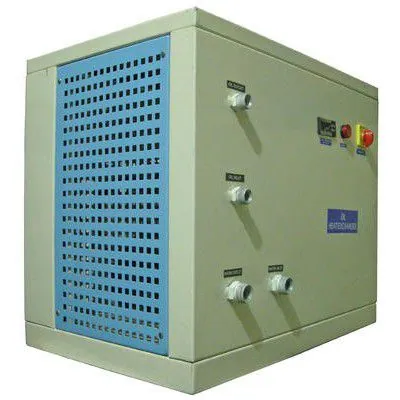
A heat exchanger moves heat from one fluid to another without letting the two mix. It is the quiet workhorse of process industry, used for heating, cooling, condensing and evaporating in everything from chemical plants to dairies. Herambh Coolingz manufactures and supplies heat exchangers for industrial duties across India.
Because the two fluids stay separate, a heat exchanger can transfer heat between streams that must never be contaminated, recovering energy from one stream to warm or cool another and cutting the fuel or power a plant needs.
What a Heat Exchanger Does
Two fluids at different temperatures and a conducting wall between them are all a heat exchanger needs. Heat flows from the hotter stream to the colder one, and the wall keeps them apart. How well it works depends on the transfer area, the temperature difference available and the flow conditions on each side.
By recovering heat that would otherwise be rejected, an exchanger often pays for itself by reducing steam, fuel or refrigeration demand in the process.
Common Types
Shell and tube exchangers handle high pressures and temperatures and are easy to clean, which is why they dominate heavy process duty. Plate exchangers pack a large transfer area into a small frame and are convenient where space is tight and fluids are clean. Finned tube units suit gas to liquid duties such as air or flue gas cooling.
The right type follows from the fluids, their pressures and temperatures, the fouling they cause and the space available on site.
Where Heat Exchangers Are Used
Chemical and pharmaceutical plants use exchangers for reaction heating, solvent recovery and condenser duty. Food and dairy lines pasteurise and cool using exchangers that can be cleaned hygienically. Power and process plants recover heat from flue gas, condensate and cooling streams.
Chillers, water heaters and oil coolers all rely on exchangers internally, so the same engineering shows up across the whole family of cooling and heating equipment.
Materials of Construction
Wetted parts are chosen to resist both the process fluid and the coolant. Stainless steel is common where corrosion or hygiene matters, while carbon steel suits many utility duties at lower cost. Where aggressive media are involved, higher alloys or non-metallic components are used.
Gaskets, joints and connection details are selected with the same care, because leaks at joints are as damaging as corrosion of the surfaces.
Thermal Design and Fouling
Good thermal design balances heat transfer against pressure drop so the exchanger does not cost more in pumping than it saves in energy. Allowance is made for fouling, the gradual build-up of deposits that chokes flow and reduces capacity over time.
Design margins and cleaning access are set so that the exchanger keeps performing between maintenance intervals rather than needing constant attention.
Selection and Customisation
Selecting an exchanger requires the flow rates and temperatures of both streams, the allowable pressure drops and the physical properties of the fluids. From these the transfer area, flow arrangement and materials follow.
Herambh Coolingz builds exchangers to the duty, including the tube layout, baffling and connection sizes that suit the installation, so the unit integrates cleanly with existing pipework.
Maintenance and Long Life
Cleaning intervals depend on the fouling nature of the fluids; some duties need cleaning each shutdown, others run for years. Tube cleaning, gasket renewal and pressure testing keep the exchanger safe and efficient.
Recording the temperatures and pressure drops across the exchanger in normal operation makes it easy to spot when performance begins to fall off, which points to fouling before it becomes a capacity problem.
Working With Cooling and Heating Equipment
A heat exchanger rarely stands alone. It sits inside a chiller, a water heater, an oil cooler or a heat recovery circuit, and its performance sets the performance of the whole machine. Selecting it well is therefore part of selecting the system well.
When an exchanger is matched to the flows and temperatures it will actually see, the equipment around it runs at lower pressure drops, uses less energy and holds its duty for longer between service stops.
- Shell and tube exchangers for heavy process duty
- Plate exchangers for compact heat transfer
- Finned tube units for gas to liquid duty
- Heat recovery from hot process streams
- Custom tube layout, baffling and connections
| Parameter | Details |
|---|---|
| Function | Transfers heat between two separate fluids |
| Types | Shell and tube, plate, finned tube |
| Materials | Carbon steel, stainless steel, higher alloys as needed |
| Design basis | Flow rates, temperatures and allowable pressure drop |
| Fouling | Margins and cleaning access allowed for in design |
| Connections | Sized and arranged to suit site pipework |
For heat exchangers engineered to your process fluids and duty, contact Herambh Coolingz with the flows, temperatures and pressures involved.