

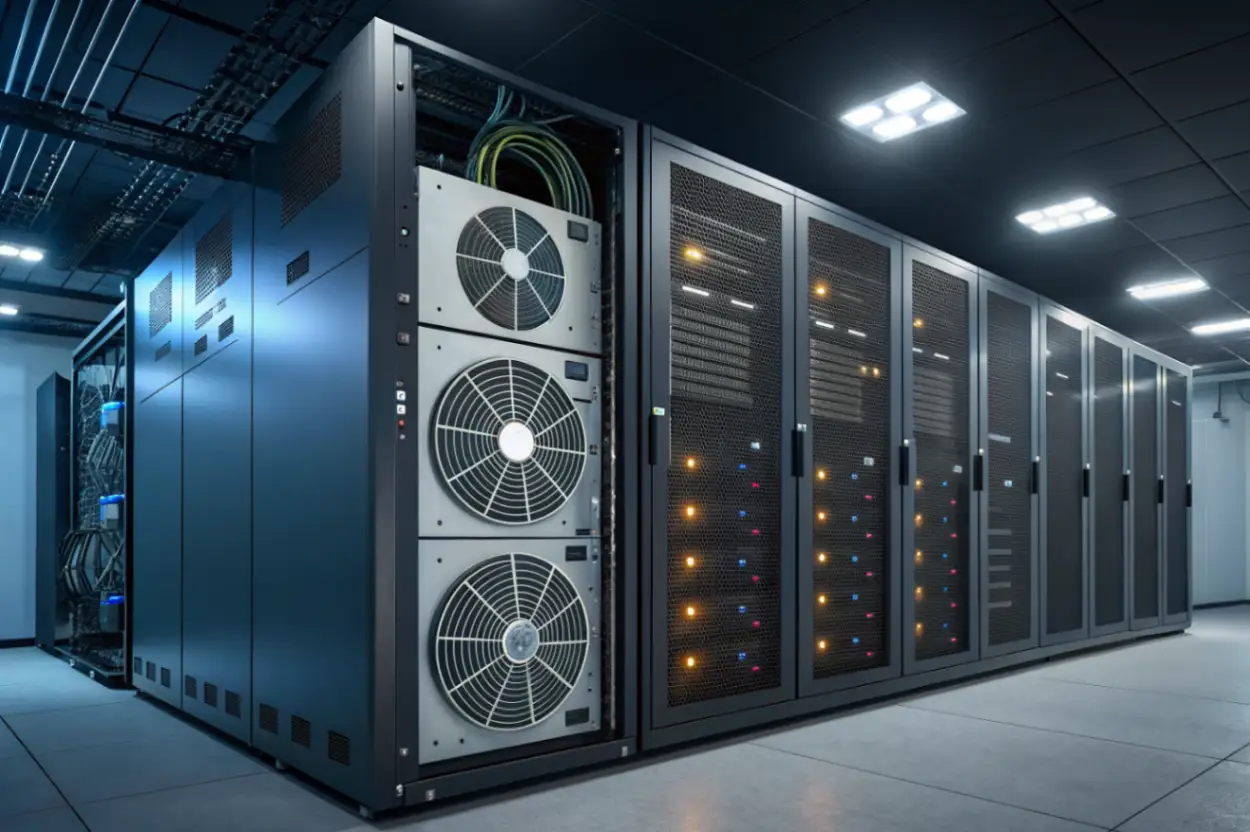
The global IT infrastructure landscape is evolving rapidly. As businesses accelerate digital transformation, the number of servers, network devices, and edge computing nodes continues to grow. This growth directly impacts the need for reliable thermal management in server environments. Overheating remains one of the most common causes of equipment failure in data centers and server rooms, which makes cooling solutions a critical part of modern infrastructure.
In 2026, demand for server cabinet air conditioners is rising across industries. From enterprise data centers to small edge computing installations, organizations increasingly recognize that traditional room cooling systems are no longer sufficient for high-density equipment. Instead, targeted cooling solutions installed directly on server cabinets offer greater efficiency, stability, and operational safety.
This article explores the key reasons behind the rising demand for server cabinet cooling systems, the technological trends shaping the market, and the industries driving adoption in 2026.
Growth of Data Centers and Edge Computing Infrastructure
The expansion of digital services is the primary driver of demand for server cabinet cooling solutions. As cloud platforms, artificial intelligence systems, and IoT networks expand, companies are deploying more servers than ever before. This rapid infrastructure growth leads to higher thermal loads in server environments.
Modern racks often contain high-performance processors, GPUs, storage arrays, and networking hardware. These components generate substantial heat during operation. When racks become densely packed, traditional air conditioning systems designed for entire rooms struggle to maintain stable temperatures around individual cabinets.
Server cabinet air conditioners solve this problem by providing localized cooling directly to the equipment generating heat. Instead of cooling the entire room, these systems maintain optimal conditions inside or around specific racks.
Edge computing is another major factor increasing demand. Companies are deploying micro data centers closer to users to reduce latency and support real-time services such as autonomous systems, smart cities, and industrial automation. Edge sites are often small and distributed, which makes large cooling infrastructure impractical.
Cabinet-level cooling systems are compact, energy-efficient, and easy to deploy in limited spaces. As a result, they have become a preferred solution for remote edge environments where reliability and minimal maintenance are essential.
Advantages of Server Cabinet Air Conditioners for Modern IT Infrastructure
As data processing requirements grow, organizations are increasingly adopting rack-level cooling technologies. Server cabinet air conditioners offer several technical advantages compared with traditional room cooling systems.
Before exploring these benefits in detail, it is helpful to look at how cabinet cooling compares with conventional cooling methods used in server environments.
| Cooling Method | Cooling Location | Energy Efficiency | Scalability | Ideal Use Case |
|---|---|---|---|---|
| Room air conditioning | Entire server room | Medium | Limited | Small server rooms |
| In-row cooling | Between server racks | High | Moderate | Medium data centers |
| Cabinet air conditioners | Directly on rack | Very high | Excellent | High-density racks and edge sites |
The comparison highlights why cabinet air conditioners are gaining popularity in modern IT environments. By focusing cooling power exactly where it is needed, these systems reduce energy waste and improve equipment reliability.
Another important advantage is scalability. Organizations can install cooling units only on racks that require them instead of upgrading entire room cooling systems. This modular approach reduces infrastructure costs and simplifies future expansion.
Additionally, cabinet cooling systems help eliminate hot spots inside racks. Uneven airflow often causes certain devices to operate at higher temperatures, which shortens hardware lifespan and increases failure risk. Rack-mounted cooling solutions maintain consistent airflow across all components.
As workloads grow more computationally intensive, particularly with AI and machine learning applications, these advantages become increasingly valuable for maintaining stable IT operations.
Key Factors Driving Demand for Rack Cooling Systems
Several technological and economic factors are accelerating the adoption of server cabinet cooling solutions in 2026. These factors influence both large enterprises and smaller organizations operating localized server infrastructure.
To understand why demand continues to grow, it is useful to examine the most important drivers shaping the market today.
-
Rapid expansion of artificial intelligence and high-performance computing workloads.
-
Increasing power density inside modern server racks.
-
Growth of distributed edge computing infrastructure.
-
Rising energy costs pushing organizations toward more efficient cooling solutions.
-
Greater awareness of hardware reliability and uptime requirements.
Artificial intelligence workloads are particularly important in this context. Training and running machine learning models require powerful GPUs and specialized processors, which generate significantly more heat than traditional CPUs. High-density GPU servers can easily exceed the cooling capacity of conventional room systems.
Another factor is the growing importance of uptime. Businesses rely heavily on digital services, which means even short outages can lead to financial losses and reputational damage. Proper cooling directly affects system stability, making targeted solutions like cabinet air conditioners increasingly attractive.
Energy efficiency also plays a major role. Cooling systems represent a large portion of data center energy consumption. By cooling only the necessary equipment instead of the entire environment, cabinet-level systems reduce overall power usage and operating costs.
These combined factors explain why organizations across industries are investing in rack-based thermal management solutions.
Energy Efficiency and Sustainability in Data Centers
Sustainability has become a major priority for technology companies and enterprise organizations. Data centers consume significant amounts of electricity, and cooling infrastructure accounts for a large portion of that energy usage. As environmental regulations tighten and energy costs rise, companies are seeking more efficient cooling strategies.
Server cabinet air conditioners contribute to improved energy efficiency by reducing wasted cooling capacity. Traditional room cooling systems operate continuously to maintain temperature across the entire space, even in areas where equipment may not require as much cooling. Cabinet cooling systems instead target specific racks with high thermal loads.
This targeted approach reduces the power required for cooling operations. In many environments, implementing rack-level cooling can significantly improve a facility’s Power Usage Effectiveness (PUE), a common metric used to measure data center efficiency.
Sustainability goals are also influencing purchasing decisions. Many companies are adopting environmental, social, and governance (ESG) policies that require infrastructure improvements to reduce carbon emissions. Efficient cooling technologies help organizations meet these goals while maintaining reliable performance.
Another advantage of cabinet air conditioners is their compatibility with modern monitoring systems. Advanced units often include sensors that measure temperature, humidity, and airflow inside racks. These systems allow administrators to optimize cooling performance and avoid unnecessary energy consumption.
As sustainability becomes an increasingly important aspect of IT infrastructure planning, energy-efficient cooling technologies will continue to gain popularity.
Technological Innovations in Server Cabinet Cooling
Cooling technologies for server racks have evolved significantly in recent years. Manufacturers are introducing advanced designs that improve performance, reduce noise, and integrate with modern data center management platforms.
One important innovation is the use of intelligent airflow control. Modern cabinet air conditioners can automatically adjust cooling power based on real-time temperature measurements. This dynamic adjustment prevents overheating while minimizing unnecessary energy usage.
Another development is the integration of smart monitoring features. Many systems now support remote management through network interfaces. Administrators can monitor rack temperatures, receive alerts, and adjust cooling parameters without being physically present in the server room.
Noise reduction has also become a design priority. Edge computing installations often exist in office environments or shared spaces where loud cooling equipment is undesirable. Newer cabinet cooling systems are engineered to operate quietly while maintaining strong cooling performance.
Some manufacturers are also exploring hybrid cooling approaches that combine air cooling with liquid cooling technologies. These hybrid systems can handle extremely high thermal loads produced by modern AI hardware while maintaining compact cabinet-level installations.
Technological innovation continues to expand the capabilities of server cabinet air conditioners, making them suitable for a wider range of applications and environments.
Industries Driving Adoption of Server Cabinet Cooling Solutions
The rising demand for server cabinet air conditioners is not limited to large data centers. Many industries now rely heavily on localized computing infrastructure that requires reliable thermal management.
Telecommunications companies are among the most active adopters of rack cooling solutions. The expansion of 5G networks requires distributed computing nodes that process data close to users. These installations often use compact server cabinets installed in remote locations, which makes cabinet-level cooling essential.
The manufacturing sector is also driving demand. Industrial automation systems generate large volumes of operational data that must be processed locally. Edge computing cabinets installed in factories require efficient cooling to maintain stable performance in challenging environments.
Healthcare organizations represent another growing market. Hospitals increasingly rely on digital imaging systems, medical databases, and AI diagnostic tools. Reliable server infrastructure is essential for these systems, and proper cooling helps prevent hardware failures that could disrupt critical services.
Financial institutions also depend on highly reliable IT systems. Trading platforms, payment processing networks, and cybersecurity infrastructure require uninterrupted server operation. Rack-level cooling solutions help maintain stable operating conditions in financial data centers and regional processing facilities.
As digital infrastructure becomes essential across industries, the need for targeted cooling technologies will continue to grow.
Conclusion
The rising demand for server cabinet air conditioners in 2026 reflects broader changes in the global technology landscape. As data processing requirements increase, IT environments are becoming more compact, powerful, and thermally demanding. Traditional room-based cooling systems are no longer sufficient for many modern server installations.
Cabinet-level cooling solutions provide targeted thermal management that improves reliability, efficiency, and scalability. They support high-density workloads, reduce energy consumption, and enable the deployment of distributed edge computing infrastructure.
Technological innovation, sustainability goals, and the rapid expansion of AI and cloud computing are all contributing to increased adoption of rack cooling systems. Organizations across industries now recognize that proper thermal management is essential for maintaining stable digital operations.
As IT infrastructure continues to evolve, server cabinet air conditioners will remain a critical component of modern data center design and edge computing deployments.