

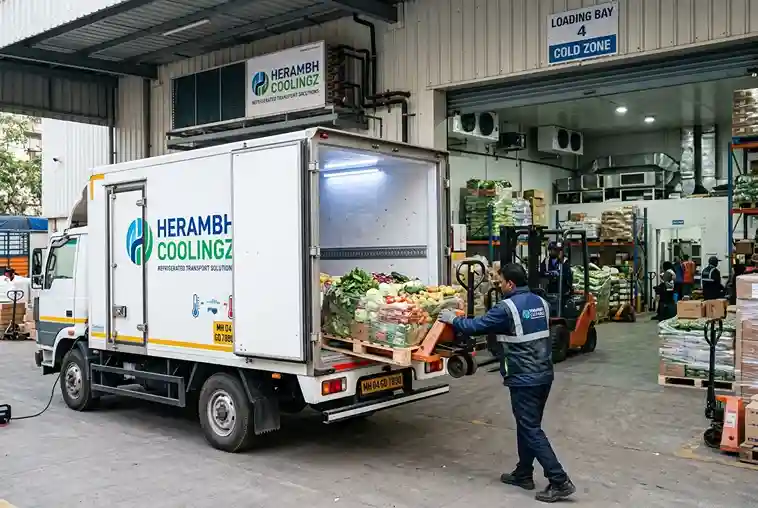
India’s food and pharmaceutical industries are growing in a way that makes temperature control not just a support function, but a core business requirement. Fresh food is travelling farther from farms to cities. Seafood, dairy, meat, frozen products, fruits, vegetables and ready-to-eat meals are expected to stay safe, attractive and consistent from production to the final point of sale. At the same time, medicines, vaccines, diagnostic samples and biotech products need carefully controlled environments where even a short temperature deviation can damage value, safety and trust.
This is where companies such as Herambh Coolingz become important. The cold chain is not only about cold rooms or refrigerated vehicles. It is a connected system of cooling equipment, insulated spaces, monitoring tools, operating discipline and maintenance support. When one part fails, the entire chain becomes weak. For India, where climate, distance, power quality, infrastructure gaps and cost pressure often work against stable cooling, the right engineering decisions can directly reduce waste, protect public health and improve profitability.
Why cold chain quality matters in India
A strong cold chain begins with a simple idea: temperature-sensitive goods must remain within a safe range from the moment they are produced until the moment they are used or consumed. In food, this protects freshness, texture, taste and hygiene. In pharmaceuticals, it protects potency, compliance and patient safety. The principle sounds straightforward, but in India it is difficult to execute because supply chains are large, varied and often fragmented.
Food may move from small farms to collection centres, from there to processors, wholesalers, cold stores, distribution hubs, retailers and finally homes. Each handover creates a risk. A crate of fruit may wait in the sun before loading. Milk may face delays during transport. Frozen goods may be exposed during unloading. A cold room may be overloaded, poorly sealed or operated at the wrong temperature. The problem is rarely one dramatic failure. More often, quality is lost through many small breaks in discipline.
Pharma logistics is even more sensitive. Many medicines are stable only within defined ranges, often between 2°C and 8°C, or under frozen and ultra-low temperature conditions depending on the product. Vaccines, insulin, biologicals and diagnostic materials can lose effectiveness when temperature control is poor. Unlike food, where damage is sometimes visible, pharmaceutical damage may not be obvious to the eye. That makes monitoring, documentation and process control essential.
India also has a wide climate range. High ambient temperatures in many regions place extra load on refrigeration systems. Humidity affects insulation, condensation and storage conditions. Long road distances increase exposure risk. Power fluctuations can interrupt stable operation. These realities mean that cold chain infrastructure cannot be copied blindly from other markets. It has to be designed for Indian working conditions, Indian energy costs and Indian service realities.
For businesses, the cold chain is closely linked to brand confidence. A retailer selling wilted vegetables, a dairy brand facing spoilage, a seafood exporter losing quality during transport or a pharma distributor dealing with temperature excursions all suffer damage beyond the immediate product loss. Customers remember inconsistency. Regulators and buyers demand records. Hospitals, pharmacies and food service companies prefer suppliers who can prove reliability, not merely promise it.
Where food supply chains lose value
The food industry needs cold chain solutions that match the actual journey of products. India produces large volumes of perishables, but the economic value of that production depends on how quickly and safely goods are cooled, stored and moved. A tomato, a fish fillet, a pouch of milk and a frozen dessert do not need the same environment. Each category has its own temperature range, shelf-life profile and handling risk.
One of the most important steps is pre-cooling. Fresh produce continues to breathe after harvest, and heat trapped inside the product accelerates deterioration. If goods enter storage already warm, the cold room must work harder, cooling takes longer and quality loss begins early. Proper pre-cooling at collection or processing points helps preserve firmness, colour and nutrition. For farmers, exporters and organized retailers, this can mean better prices and fewer rejections.
Cold storage design is another critical area. Many older facilities were built for narrow commodity use, especially products such as potatoes. Modern food supply chains need multi-temperature storage, better airflow, hygienic surfaces, faster doors, proper loading zones and more precise controls. A cold room that works for bulk vegetables may not suit dairy, meat or ready-to-cook products. The more diverse the product mix, the more important it becomes to plan zones instead of treating the warehouse as one large cold box.
Transport remains a major weak point. Refrigerated vehicles must be selected according to route length, door-opening frequency, payload, insulation performance and product type. A vehicle used for city distribution has different requirements from one used for long-haul transport. In urban delivery, repeated door openings can quickly disturb temperature. In intercity movement, compressor reliability, insulation thickness and driver training become more important.
Food companies also need better handling discipline at the edges of the cold chain. Loading docks, staging areas and retail backrooms often become silent loss points. A shipment may be stored perfectly for hours and then sit outside a cold room during sorting. Such exposure reduces shelf life even if the product is later returned to the right temperature. Good cold chain planning therefore includes covered loading bays, fast transfer systems, temperature curtains, insulated containers and clear standard operating procedures.
For India’s food sector, the most useful cold chain solutions are not always the most complex. They are the ones that reduce everyday leakage of quality. Reliable chillers, well-insulated panels, correct evaporator placement, clean drainage, door discipline, backup power, basic monitoring and preventive maintenance can often deliver stronger results than expensive equipment used without process control.
The practical needs of food and pharma businesses differ, but they often depend on the same foundation: stable engineering, clean installation, accurate controls and service support. The table below shows how the requirements change across key cold chain use cases.
| Area | Typical temperature need | Main risk | Suitable cold chain solution |
|---|---|---|---|
| Fresh fruits and vegetables | Chilled, product-specific range | Moisture loss, ripening, decay | Pre-cooling, humidity-aware storage, controlled airflow. |
| Dairy products | Usually chilled | Spoilage, bacterial growth, texture loss | Hygienic cold rooms, rapid chilling, reliable backup power. |
| Meat and seafood | Chilled or frozen | Safety risk, odour, drip loss, rejection | Blast freezing, frozen storage, insulated handling zones. |
| Frozen foods | Frozen range | Thawing, refreezing, quality damage | Deep freezers, high-performance doors, temperature alarms. |
| Vaccines and biologics | Strict controlled range | Potency loss, compliance failure | Validated cold rooms, continuous monitoring, audit records. |
| Diagnostic samples | Controlled chilled or frozen range | Sample degradation, reporting errors | Small precision units, tracked transport, trained handlers. |
This comparison shows why one-size-fits-all cooling is not enough. A cold chain system must be designed around the product, the movement pattern and the risk level. Food companies may focus strongly on shelf life, appearance and wastage. Pharma companies may place heavier emphasis on validation, documentation and regulatory confidence. Both need equipment that can perform consistently in real operating conditions.
What pharma logistics demands
Pharmaceutical cold chains require a different level of discipline because the final impact can reach patients directly. A broken cold chain can make a medicine less effective, delay treatment or create compliance problems for manufacturers and distributors. The sector therefore needs solutions that combine refrigeration engineering with traceability and process control.
The foundation is temperature mapping. A cold room does not have the same temperature in every corner. Airflow, door location, shelving, evaporator placement and load pattern can create hot and cold spots. Pharma companies need to know these zones before storing sensitive products. Mapping helps decide where products can be safely kept, where sensors should be placed and how the system behaves during normal operation.
Validation is equally important. A pharma cold room, freezer or transport unit must prove that it can hold the required range under defined conditions. This is not only a technical exercise; it is a trust mechanism. Buyers, hospitals, regulators and export partners need confidence that the product has not been exposed to unsafe conditions. Documentation becomes part of the product’s journey.
Monitoring must be continuous, not occasional. Manual temperature checks are useful, but they cannot catch every excursion. Digital sensors, data loggers, alarms and remote dashboards allow operators to respond before damage occurs. For high-value medicines, alert systems should reach responsible staff quickly when temperature moves outside the safe band. A delayed response can turn a small technical issue into a costly product loss.
The pharma sector also needs backup planning. Power interruption, compressor failure, door malfunction or transport delay should not create immediate failure. Good systems include backup power, standby equipment, emergency transfer plans and service agreements. In India, where power quality can vary by location, this planning is not optional. A pharmaceutical cold chain should be designed with failure scenarios in mind.
Another issue is last-mile delivery. A medicine may leave a well-controlled warehouse and then travel through smaller distributors, pharmacies, hospitals or clinics. Each step needs appropriate packaging and handling. Insulated boxes, phase change materials, validated shippers and route planning can help maintain temperature when active refrigeration is not practical. The solution should match the risk: a short local transfer does not need the same design as a long-distance vaccine movement, but both need control.
For Herambh Coolingz and similar engineering-focused companies, pharma offers a clear opportunity to support not just equipment supply, but complete cold chain reliability. This means designing rooms that are easy to clean, easy to monitor, easy to maintain and suitable for audits. It also means helping customers understand that cooling performance depends on installation quality and operating discipline, not only compressor capacity.
Which solutions fit Indian conditions
India needs cold chain systems that are reliable, serviceable and economically realistic. Advanced technology has value, but it must survive local operating conditions. Equipment should handle high ambient temperatures, dust, voltage variation, heavy use and long working hours. A system that looks impressive on paper but fails often in the field does not solve the real problem.
Energy efficiency is one of the biggest priorities. Refrigeration is power-intensive, and energy cost can make cold chain operations expensive. Efficient compressors, proper insulation, high-quality doors, variable speed drives, correct refrigerant choice and optimized airflow can reduce operating expenses. For many customers, the lowest purchase price is not the lowest total cost. A cheaper system that consumes more power and breaks down often becomes expensive over time.
Insulation deserves more attention than it usually receives. Poor insulation forces compressors to run longer, increases condensation and reduces temperature stability. Panels, joints, floor insulation and door sealing should be selected carefully. In hot climates, weak insulation can quickly erase the benefit of good refrigeration equipment. For cold rooms, the building envelope is as important as the machine.
Modular design is useful for growing businesses. Many food processors, retailers and pharma distributors cannot build massive facilities at the beginning. They need systems that can expand as demand grows. Modular cold rooms, scalable refrigeration units and flexible storage zones allow businesses to start with the right capacity and add more without redesigning everything. This is especially relevant for regional hubs, mid-sized processors and distributors serving tier-two and tier-three cities.
The human side of cold chain operations is just as important. Even the best equipment can fail when staff do not understand loading patterns, door discipline or alarm response. Simple training can prevent common mistakes. Workers should know why products cannot be stacked against evaporators, why doors should not remain open, why temperature records matter and why maintenance alerts should not be ignored.
A practical cold chain system for India should usually include several connected elements:
• Correct capacity calculation based on product load, pull-down time and door-opening frequency.
• Strong insulation with properly sealed joints, floors and doors.
• Refrigeration equipment selected for Indian ambient conditions.
• Temperature monitoring with alerts and accessible records.
• Backup power or contingency planning for sensitive goods.
• Preventive maintenance schedules with trained service support.
• Clear operating procedures for loading, unloading and emergency response.
These elements are not complicated in theory, but they require discipline in execution. Many cold chain failures happen because one part is treated casually. The compressor may be strong, but the door leaks. The room may be well built, but staff overload it. Sensors may be installed, but alarms are ignored. Real reliability comes from the system working as a whole.
Sustainability is also becoming more important. Customers and regulators increasingly expect responsible cooling. This includes energy-efficient equipment, lower-leakage systems, better refrigerant management and smarter use of power. Solar-assisted systems, thermal storage and improved controls can support certain applications, especially where electricity supply is costly or inconsistent. Sustainability should not be treated as a branding exercise; it should reduce operating risk and long-term cost.
How Herambh Coolingz can support reliable operations
Herambh Coolingz is positioned in a space where engineering decisions directly affect business outcomes. For customers in food and pharma, the value of a cooling partner lies in understanding the product, designing the right system and supporting it after installation. Selling equipment is only one part of the job. The deeper value comes from building dependable temperature-controlled environments.
For food businesses, Herambh Coolingz can focus on solutions that preserve freshness and reduce avoidable losses. This may include cold rooms for processors, chillers for production lines, refrigeration systems for warehouses, freezers for frozen goods and cooling equipment for packaging or dispatch areas. The design should begin with product behaviour. Leafy vegetables, dairy, meat, seafood and frozen snacks cannot be treated in the same way. Airflow, humidity, temperature range and loading rhythm all matter.
For pharmaceutical businesses, the company can support more controlled and documented environments. Cold rooms should be designed with stable temperature distribution, proper sensor placement and reliable alarms. Customers may also need support during mapping, validation preparation and maintenance planning. A pharma client is not only buying cooling capacity; it is buying confidence that sensitive stock will remain safe.
The best cold chain partners also help customers avoid overbuilding and underbuilding. Oversized systems can waste energy and increase capital cost. Undersized systems struggle to maintain temperature and wear out faster. Proper heat load calculation is therefore essential. It should consider product entry temperature, storage temperature, daily turnover, room size, insulation quality, lighting, people movement, equipment heat and door openings. When calculations are realistic, performance becomes predictable.
Service quality can become a major differentiator. Cold chain customers cannot afford long downtime. A cold room failure during peak summer, a freezer breakdown during export dispatch or a chiller stoppage in a pharma warehouse can cause serious loss. Preventive maintenance, spare parts availability and fast troubleshooting are essential. For many Indian businesses, the question is not only “who can install the system?” but “who will support it when something goes wrong?”
Herambh Coolingz can also help customers modernize older facilities. Many companies already have cold rooms but struggle with high energy bills, uneven cooling or frequent breakdowns. Instead of replacing everything, some facilities can improve performance through better doors, insulation repairs, updated controls, compressor servicing, evaporator repositioning, airflow correction and sensor installation. Such upgrades can deliver strong practical benefits without forcing the customer into unnecessary capital spending.
Digital monitoring is another area where value can grow. A simple dashboard showing temperature trends, alarms and equipment status can change how a business manages risk. For food companies, it helps reduce disputes and identify weak points. For pharma companies, it supports documentation and audit readiness. Even small and mid-sized businesses can benefit from affordable monitoring if the system is simple enough to use every day.
Conclusion: building trust through controlled temperature
Cold chain development in India is not only an infrastructure story. It is a quality story, a health story and a competitiveness story. Food businesses need to protect freshness from farm to fork. Pharma companies need to protect product integrity from manufacturing to patient use. Both sectors depend on cooling systems that are stable, efficient and supported by disciplined operations.
Herambh Coolingz can play an important role by offering solutions shaped around real Indian conditions rather than generic assumptions. The market needs cold rooms that hold temperature during harsh summers, chillers that run efficiently, freezers that protect product value, monitoring systems that warn before losses happen and service support that keeps operations moving. Customers need partners who understand that refrigeration is not a single machine, but a chain of decisions.
The future of India’s cold chain will belong to companies that combine engineering strength with practical thinking. The strongest solutions will not be the most complicated ones. They will be the ones that keep products safe, reduce waste, lower operating cost and give businesses confidence every day.